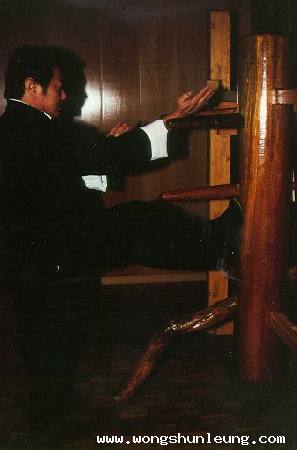
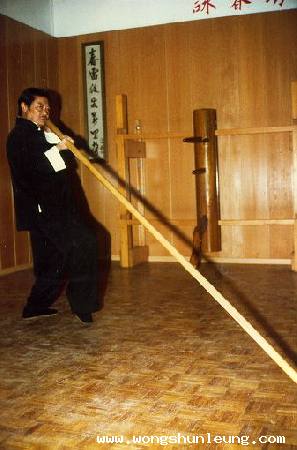
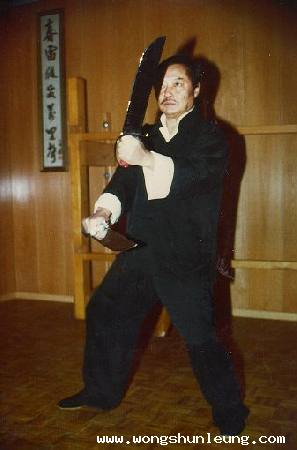
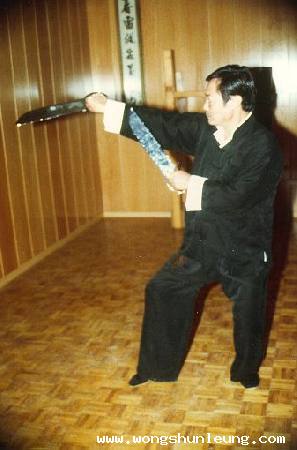
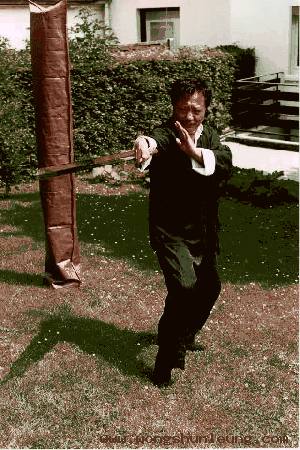
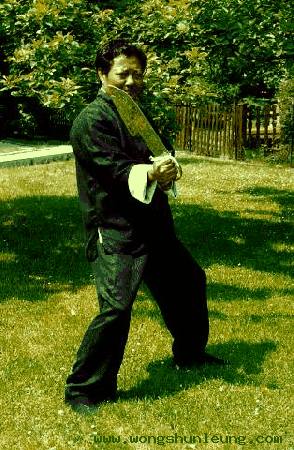
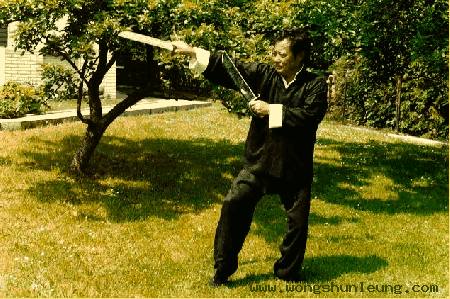
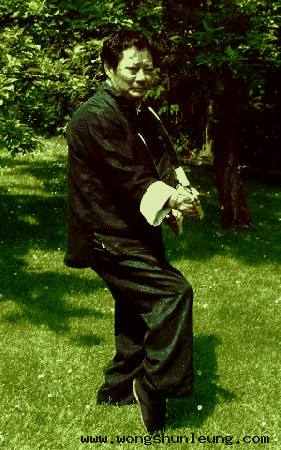
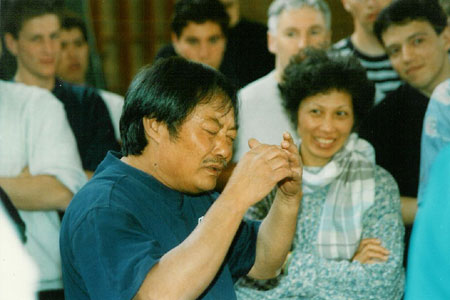
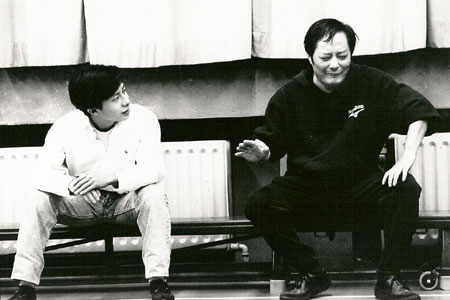
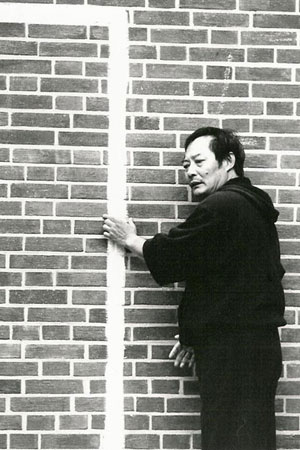
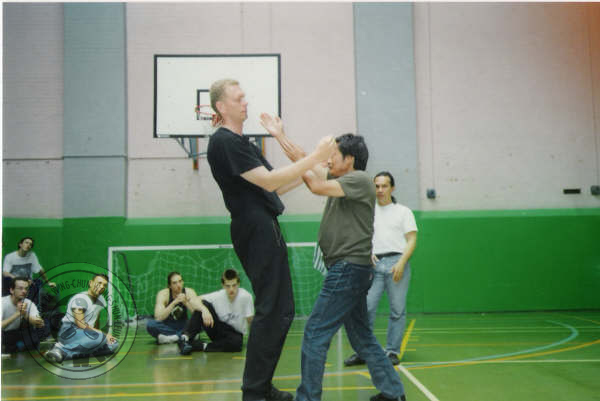
|
The Wong Shun Leung
Method
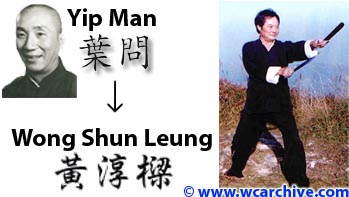
Yip Man -> Wong Shun Leung -> |
Dedicated to Wong Shun Leung (June 8th, 1935 - Jan
28th, 1997)
I have many friends in the WSL community, so I
decided to create this page to help them promote the Wong Shun
Leung Method of Ving Tsun. I have released
this page before it was complete so you may help with it's
creation. Please note:
That I rely on your help to make this page a great resource. I am too busy to do all the
research myself anymore, so all updates to the site come from
it's visitors.
|
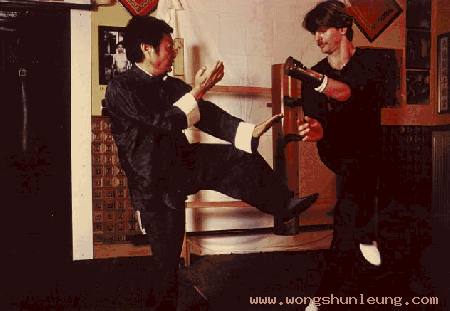
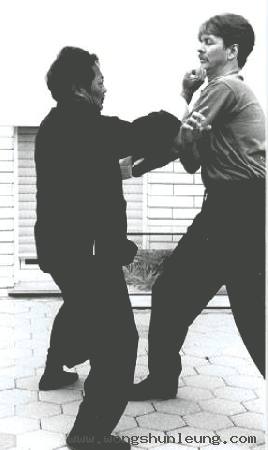
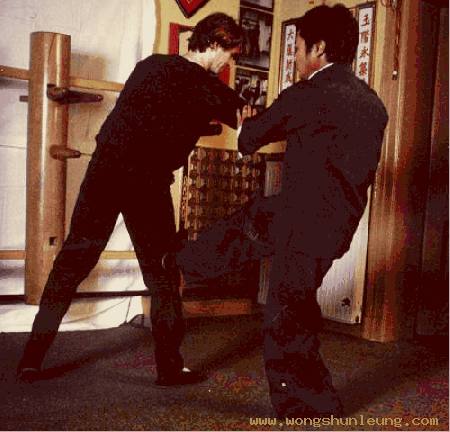
Wong Shun Leung, the
Legend
By Cliff Au-Yeung and Lewis Luk
quoted
from
Ip Man Ving Tsun 50th Anniversary
Translated by Buick Yip and David Peterson. Used
with Permission.
Preface
Since Grand Master Ip Man began teaching the Ving Tsun
style of Chinese martial arts in Hong Kong, his lineage
has developed for over 50 years, and Ving Tsun has grown
from relative obscurity in China, to a practical martial
arts system renowned and practiced throughout the world.
As such, the achievements and influence of the late
Grand Master are well deserving of legendary status. Our
teacher, sifu Wong Shun Leung, who learnt from the Grand
Master with diligence, intelligence and dedication
during the 50s and 60s, representing Ving Tsun
victoriously in some 60-70 “comparisons of martial
skill” (beimo) in Hong Kong against devotees of many
other fighting systems, laid the groundwork for the
eventual expansion of Ving Tsun that has taken place.
His life story is equally deserving of legendary status.
The telling of his life story is possible after his
untimely death by virtue of his lifetime of achievements
as recalled by his peers, students and friends. Ving
Tsun brothers and friends such as Chu Shong Tin, Chan
Chi Man, Wu Chun Nam, Leung Man To and Wong Tak Chiu
were all more than willing to share their memories of
his life to ensure that this essay provide a truthful
account of the man and his deeds, thus preventing future
rumors or miss-truths emerging which would otherwise
cause him to seem supernatural or unbelievable, rather
than the practical and realistic person that was Wong
Shun Leung.
Descendant of a community-minded scholarly family
Wong’s ancestral home was the small village of Songma,
Hangtaan Town, Sundak (Shunde) County in Guangdong
Province (where incidentally, everyone had the surname
Wong), and he was born the second son of a respected
family. His father, Wong Kay Yat, was a famous doctor of
Chinese traditional medicine, well known in the region
(prior to WWII, one of the 10 most famous doctors in
Guangdong) and just as famous for his expertise in
treating women’s health problems after moving to Hong
Kong. As part of a family which included an older
brother (who passed away early on), a younger brother
(who incidentally also studied Ving Tsun from Wong), and
six younger sisters, Wong Shun Leung was born in Hong
Kong on the 8th June 1935. At that time, the former
British colony had a population of less than half a
million, and the lifestyle of those who lived there was
generally simple compared with the Hong Kong of today.
1935-1952: the Warring Years, where truth was sought
through martial art
When Wong was a lad, he received adequate family
discipline, learning obedience, literature and
calligraphy, and was a gifted student who easily picked
up both academic and cultural knowledge. He responded
especially well to literature, from which he developed
an extensive knowledge of Chinese culture and history,
and then later on he also expanded his studies to
include a Western education by attending an
Anglo-Chinese school. At this stage of his life, those
who knew him saw how his natural ability to adapt and
adjust to his surroundings began to surface.
From very early on, Wong developed a strong sense of
racial pride, with the true-life experiences of colonial
inequality and foreign invasion at the hands of the
Japanese in WWII fuelling his hatred of those who hid
behind meaningless talk. He despised unjust behavior and
had strong principles, which he was prepared to defend.
He proceeded to seek the truth through real grit, and
martial arts offered an open path by which a young and
restless youth could express his personality and
opinions.
In the summer of 1942, a bunch of boys gathered in
discussion, with a boy about his age boasting of being
some kind of spiritual superhuman. Wong could not stand
such nonsense and argued with the boy, resulting in a
reckless fight breaking out between them in which the
two boys ending up rolling all over the ground, tearing
each others clothing as they wrestled about. At such a
tender age, Wong was already exhibiting his fearless
desire to defend the truth.
According to Wong himself, way before he began actually
learning martial arts, he had countless “contests” with
many under-qualified sifu, whereby he made them lose
face, proving that they had more talk than actual
ability.
Another story was that while Wong had started learning
Wu style Tai Chi from an uncle, he eventually switched
to learn some Tai Chi and hard fist forms from a teacher
named Wong (no relation). One night while Wong Shun
Leung was practising, this sifu Wong and some guests
were swapping martial tales with each other when the
teacher said that while in the Sichuan Province city of
Chengdu, he had witnessed an old master stop a moving
car from running over a fallen child by exerting chi
through his two palms. On hearing this, Wong put on his
jacket and left without as much as a backward glance and
never returned, deciding that a person who told such
tales could not possibly possess any true gung-fu.
Wong had already started to learn boxing while in junior
high school, and according to his own account, once
knocked out his instructor while sparring in the ring. A
few days later, however, the instructor tried to exact
revenge by using heavier punches to cause Wong to bleed
all over. Feeling that this instructor was especially
mean and having such a negative attitude towards a
student, in order to avoid further ill feelings or
unhappiness, Wong once again quit his training.
Wu Chun Nam, who was a classmate of Wong’s from the
third year of their high school studies, recalls that
Wong Shun Leung already had basic training in both
western boxing and Tai Chi by 1952.
1953-1960: meeting the Grand Master
While there have been a number of different versions of
Wong’s first meeting with Ip Man, the account given
below is based on what Wu Chun Nam and Chu Shong Tin
recall of Wong’s own account of the events:
Ip Man first began teaching at the ‘Hong Kong Restaurant
Workers Union’ in 1950. From 1953-1954, the class
relocated to Hoi Tan Road in the Shamshuipo district of
Kowloon before eventually returning to the original
location in 1955. It was around that time, while Wong
Shun Leung was in his youth, that he often pitted his
skills at western boxing against fighters from various
disciplines. In one of these matches, which took place
at Kadoorie Hill, an exponent of Tai Chi Praying Mantis
defeated Wong, and he swore that he would be back for a
rematch in three months. At that time, a friend of his
cousin by the name of Law Bing had been learning Ving
Tsun for a while, and through him, Wong met several
other Ving Tsun practitioners. It is believed that he
actually saw Lok Yiu competing successfully in a
challenge match and came to admire the Ving Tsun method,
so much so that on February 1st 1954, two days before
the Chinese Lunar New Year, Wong Shun Leung, accompanied
by his cousin, finally came to the school at Hoi Tan
Road with a view to become a student of Ip Man.
(According to Wong, he hadn’t known the name of the
style at that particular time, only that it was a form
of boxing from Fatsaan (Foshan) in Guangdong Province.
Only after he began studying it, did he learn from Ip
Man what it was called.) As it was so close to the Lunar
New Year, there were few people present when Wong
arrived at the school, just two or three relative
beginners. Being young and keen to seek genuine gung-fu,
and lacking an understanding of the protocol expected of
him, Wong asked if he could try out against those
present, not realizing that this could be considered a
challenge. Ip Man was polite enough to allow him to go
ahead, only to see Wong defeat two of the students
easily, one after the other. Without as much as raising
his voice, Ip Man gestured to Wong to try out his skills
with him saying, “I’ll have a play with you.” Wong Shun
Leung began the attack, using his boxing skills to throw
punches at Ip Man, but Ip Man calmly faced Wong, hands
forward of his body, and using his forward footwork,
stepped inside Wong’s guard forcing him back onto the
wall. Making use of taan da to nullify Wong’s technique,
Ip Man then threw a burst of light punches to Wong’s
head and chest, not inflicting any damage, but clearly
indicating to Wong that he had been controlled and
beaten. Once this has taken place a second and then a
third time, Wong was amazed by such skill and control,
deciding then and there to become a student of Ip Man.
He commenced his training four days after New Year, on
the 6th February. It is also worth mentioning that on
that first visit, following the exchange with Ip Man,
Wong Shun Leung also had a match with senior student Ip
Bo Ching, with neither one being able to totally
dominate the other.
(Translator’s note: When retelling this story in an
interview not long before his death, sifu told the funny
tale of how, when Ip Bo Ching arrived at the school, Ip
Man took him into the kitchen area on the pretext of
making him a cup of tea. Sifu’s cousin turned to him
saying, “What a nice teacher this man is, …look, he even
makes a cup of tea for his student.” Sifu responded,
“He’s not making him a cup of tea, …he’s telling him how
to come out and give me a hard time!” Apparently the
ensuing match was quite full-on, but neither Wong nor Ip
came out looking too bad.)
Hard work and perseverance leads to success
Wong Shun Leung himself recalled that shortly after he
commenced his training in Ving Tsun, he began learning
how to strike the wallbag. One day, while he was hitting
the wallbag, Grand Master Ip Man was talking to Leung
Sheung and said, “Look at the way this kid is looking at
the wallbag as he hits it, …it’s as if he’s hitting a
person, not just a bag. I reckon he’ll create a stink in
Hong Kong within a year (Ip Man referring here to Wong
stirring up Hong Kong’s martial arts community through
challenge fights).” Ip Man of course turned out to be
correct, except that it only took Wong three months
before he began creating an impression!
Chan Chi Man started training under Ip Man in 1955, and
was one of the last students of the ‘Restaurant Worker’s
Union’ period. According to him, Wong Shun Leung was
very dedicated to his training. He imposed a strict
training regime on himself, and refused to rest until he
had completed his daily programme of techniques and
drills. For example, he would strike the wallbag with
five hundred punches on each hand, then five hundred
times with both palms, or he would move up and down the
room throwing punches fifty times in succession, and so
the routine went on. He would maintain himself in
fighting condition around the clock, always prepared for
action, and when working out with his classmates in chi
sau practise, Wong was very serious, often treating
training sessions no differently from a real fight.
Wu Chun Nam was Wong Shun Leung’s schoolmate, as well as
being his first Ving Tsun student. He recalls how, in
order to find more time for practising, Wong would skip
school classes to go to the gwoon, often spending as
much as ten hours there. On arriving home at night, Wong
would be so exhausted that he couldn’t even eat his
dinner, and would simply crawl into bed and sleep.
Eventually, Wong weakened himself to such an extent by
such a rigorous training routine that both the Grand
Master and his father had to prescribe herbal remedies
to build his strength back up.
Wu often went to Wong’s home to do both schoolwork and
practice Ving Tsun. Once, while the two of them were
training within a large room in the house, Wong Shun
Leung got a little too serious while using the po pai
jeung technique, sending Wu flying backwards, smashing
an antique bed belonging to Wong’s mother in the
process. That of course raised the ire of Wong’s father,
resulting in a large portion of family discipline.
Contests and challenge matches around the town
Masters such as Chu Shong Tin, Chan Chi Man, Siu Yuk
Man, and several others, have all mentioned the late
Grand Master’s attitude towards his student’s training
at that time. He would say to his more experienced
students, “After you have practiced for a time, you
should go out and test yourself to gauge your level of
skill.” In those days, there was little restriction
placed by authorities on such semi-open contests,
compared with today. As a result, there were several
members of the Ving Tsun school who engaged in such
“tests of skill” at that time. The one person who had
more challenge matches than anyone else was Wong Shun
Leung. While he certainly wasn’t the only member of the
Ip Man Clan to fight in these matches, according to Wong
Shun Leung himself, because of his small stature (around
five foot six inches tall, and weighing around 105 lbs),
many of his opponents chose to fight him, thinking that
he would be an easy adversary (there were no weight
classes applying in these challenge matches of the
fifties and sixties), thus Wong ended up having
somewhere in the vicinity of sixty to seventy such beimo
during this period in Hong Kong. Many newspapers and
periodicals of the time, such as the ‘Hung Luk’, ‘Ngan
Dang’ and ‘Ming Bo’ newspapers, and the popular 70s ‘New
Martial Hero’ magazine, reported on Wong’s exploits.
Fortunately, some of these reports still exist today and
diehard Ving Tsun devotees and those interested in this
period of martial arts history, can seek out these
accounts for themselves as there are far too many of
these stories about the “Gong Sau” exploits of Wong Shun
Leung than this brief account will allow for.
The 1960s: teaching Ving Tsun as a hobby
At the beginning of the sixties, Wong Shun Leung and his
family resided on the third floor of a pre-war apartment
building at 466 Nathan Road, Mongkok. As Wong Shun Leung
was totally engrossed with the study of Ving Tsun, he
incessantly sought out training partners to practice
with, eventually choosing people to teach and train with
according to their body size and strength so as to
provide himself with a greatest variety of partners
possible. Because his primary goal wasn’t to teach, or
to make a living from his training, Wong chose his
students very seriously and as Wu Chun Nam recalls, many
people of various backgrounds found their way to Wong
Shun Leung’s door at that time, becoming his students,
such as Yeung Yi Choi, Lo Min, Chang Yip Kau, Lau Man
Kwong, Cheung Chan Ching, Wan Kam Leung, and so on.
While the relationship between Wong and these people was
largely that of a teacher and his students, Wong
wouldn’t allow them to refer to him as sifu, preferring
that they simply call him Leung Goh (“Big Brother
Leung”), which was appropriate as their ages were all
quite similar, and Wong also invited several of Ip Man’s
students to train at his home, such as (Henry) Pang Kam
Fat, Wong Tsok, Chan Chi Man, (Andrew) Ma Hang Lam, and
others, so it was inappropriate for Wong to be addressed
as sifu. The very first time that Wu Chun Nam took part
in a beimo match was on Wong’s rooftop with Wong acting
as an official in the proceedings. This was a time of
great historical importance in the development of Ip
Man’s Ving Tsun in Hong Kong, and was the first time
that such a match was recorded on film. On the 10th of
May, 1969, Wong Shun Leung officially opened up the
first ‘Wong Shun Leung Ving Tsun Gung-fu School’ in the
Yaumatei district of Kowloon, on the first floor of a
building there, and began recruiting students from the
public. We believe that between 1969 and 1971, he
conceived the establishment of the ‘Wong Shun Leung Ving
Tsun Martial Arts Association’ for the promotion and
development of his beloved Ving Tsun. During this time,
Wong had many, many people coming to him wanting to be
his student, but while this was pleasing, Wong couldn’t
accommodate them all, so he would have prospective
students register their names and come back at a later
date. |
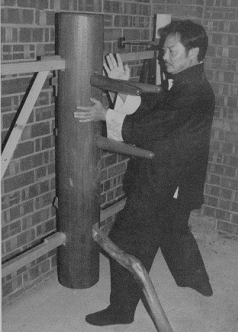

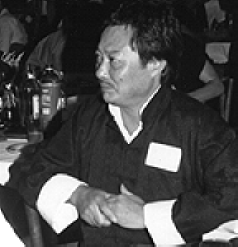
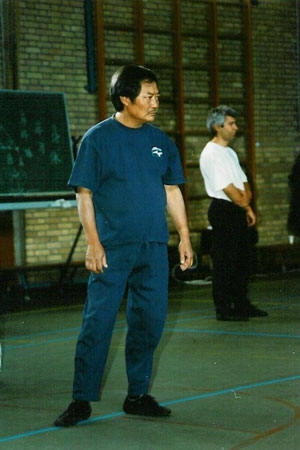
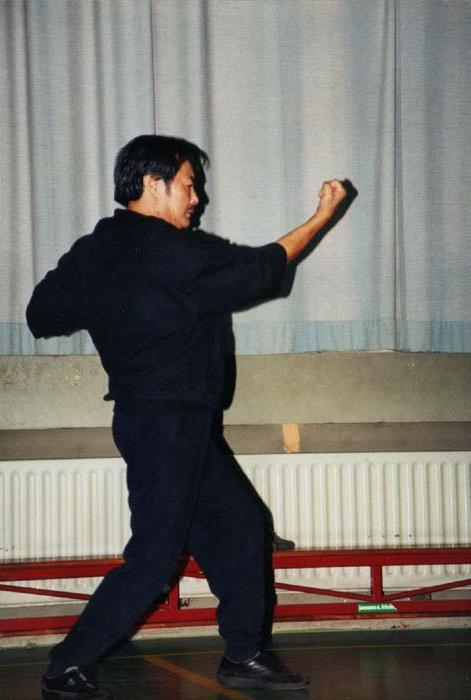
|
The 1970s: lessons of the past handed down to the
next generation
Because of reconstruction on the building, Wong moved
his school from the original Yaumatei premises to a new
location on the 5th floor of another building on
Reclamation Street on the 16th August, 1971. He
continued teaching at that location until 1975. During
that period, he and his students took part in countless
tournaments in Hong Kong and elsewhere in the region,
with outstanding results. At that time, with the help of
friends, Wong moved his school to Granville Road in the
Tsimshatsui district and continued the advancement of
Ving Tsun. In 1976, Wong Shun Leung left Tsimshatsui and
commenced teaching in the front apartment on the 9th
floor of 506-508 Nathan Road, Yaumatei.
Thus, from the end of the 60s through to the 70s, Wong
Shun Leung threw all his efforts into developing and
refining his Ving Tsun. He taught many, many talented
students during those years, many of whom are now famous
Ving Tsun instructors in their own right both in Hong
Kong and overseas, such as Wan Kam Leung, Ng Chun Hong,
(Tommy) Yuen Yim Keung, (Lawrence) Leung Chi Sing, Ko
Kwong Nin, (Gary) Lam Man Hok, Chan Kim Man, Ko Kin, and
so on.
The 1980s: roots in Hong Kong, flowers all over the
world
By the end of the 70s and the beginning of the 80s, Wong
Shun Leung had come to something of a low point in his
life, having struck hard times in keeping his school
running. Then, towards the end of the summer of 1983, a
German by the name of Philipp Bayer came to Hong Kong
with the aim of becoming Wong’s student, and studied the
Ving Tsun system under him there. Bayer invited Wong
Shun Leung to travel to Germany and Europe, with a view
to conduct seminars there for the promotion of ‘Wong
Shun Leung Ving Tsun Pugilism’, and he then set about
organizing everything on behalf of his teacher. In
December of the very same year, an Australian by the
name of David Peterson (who also goes by the Chinese
name Ding Chaochen) also came to Hong Kong specifically
to become Wong Shun Leung’s student in Ving Tsun. From
then on, Peterson returned to Hong Kong at least once
every year after that until 1992 in order to study at
Wong’s school. During that time, Peterson also arranged
for Wong to travel to Australia for the purpose of
conducting seminars. It really could be said that this
presented Wong with a dream opportunity in his lifetime,
and both of these students did much to promote Wong Shun
Leung and Ving Tsun overseas. Wong took advantage of
this opportunity and through his trips to European
countries, was able to establish the “Wong Shun Leung
Way” in Europe. He then traveled to Europe for seminars
every year, staying there for up to two months at a
time. As for Australia, Wong first went there in
February of 1986 to conduct his inaugural seminars
there. In total, between then and 1994, Wong Shun Leung
traveled to Australia four more times. One could well
say that this was a high point in Wong’s Ving Tsun
career, moreover, it remained so on into the 1990s.
From the mid-1980s onwards, foreign students from many
different nations came to Wong Shun Leung’s school in
Hong Kong for training. One of Wong’s student, Cliff Au
Yeung (one of the authors of this article), became
Wong’s chief translator in order to overcome the
language barrier, both in Hong Kong and in his teacher’s
travels to Europe for seminars on at least two
occasions. Several of Wong Shun Leung’s students of this
period, such as Chiu Hok Yin and Li Hang Cheong, became
successful Ving Tsun instructors in present day Hong
Kong.
The 1990s: a Dragon returns home, a Hero goes to
heaven
The school in Nathan Road had to be closed in 1988
because of rental problems, so Wong began using the
‘Ving Tsun Athletic Association’ premises for running
his classes, remaining there until 1997. Mr Leung Man
To, a good friend of Wong Shun Leung as well as a famous
martial arts researcher especially interested in Chinese
wrestling, respected Wong very much indeed for his
knowledge, ability and experience in Ving Tsun Gung-fu.
With his connections in China, in 1996 Mr Leung
organized a seminar in Beijing, China. It had been
Wong’s long time desire to reacquaint the Chinese people
with the Ving Tsun system, especially since it had
become so successfully introduced to Hong Kong by Ip
Man, and eventually to the rest of the world, yet little
known to the Chinese people in its homeland. By doing
so, Wong hoped to see Ving Tsun regain the fame and
popularity that he felt it deserved, and so he made his
first trip to the capital, Beijing, on August 12th of
that year, accompanied by his student Li Hang Cheong and
Mr Leung Man To. It was a very successful trip, with
many famous Chinese martial artists amongst his
audience, while a well known martial arts magazine,
‘Martial Soul’, ran a series of articles about Wong Shun
Leung and his exploits. While in Beijing, Wong was also
able to demonstrate his theories on the‘ Science of Ving
Tsun Pugilism’ as well as presenting his article ‘A
Discussion of the Science of Ving Tsun Pugilism’ which
described the essence of Ving Tsun theory, based upon
his many years of practicing and researching the system.
By October of the same year, the ‘Chinese National
Sports Control Centre’ and ‘Martial Soul’ magazine,
together with the sponsorship of the Hong Kong ‘VTAA’,
again invited Wong Shun Leung to Beijing to conduct the
first ever such presentation which was named the ‘1996
All China Ving Tsun Gung-fu Short Course’. This
historical event was headed by Wong who was accompanied
by ten of his Hong Kong and European-based students
(these included Chan Kim Man, Ma Chung Sing, Li Hang
Cheong, Wong Kwong Yung, Law Wing Tak, Fong Si Lai, Wong
Fei, and others), and they all played an important role
in bringing Ving Tsun Gung-fu back to the mother
country. (Note from the translator: I met si-suk Wong on
the street in Mongkok shortly after his return from this
trip and he exclaimed, “I knew that it wasn’t going to
be easy, but they really tested me out and showed no
mercy to this elderly man.”)
According to Mrs. Wong, before her late husband made his
trips to China, he prepared everything with great care
and attention, while at the same time still carrying on
with the teaching of his classes. All of this, plus a
lot of social activities, left Wong extremely fatigued.
On January 12th, 1997, while at a gathering of his Ving
Tsun brothers at the ‘VTAA’ , he collapsed into a coma
and was rushed by ambulance to the Kwong Wa Hospital
where he remained until his death some 16 days later
[January 28th 1997, at 3.07 p.m]. During this time, many
of his friends, students, both local and overseas-based,
came to show their concern of his situation, and
ultimately, pay their last respects at his funeral after
he passed away on the afternoon of the 28th of January,
having never regained consciousness in his 62nd year. [He died at the age of 61.
] |
Wong Shun Leung Lineage Instructors/Sifus:
|
Sifu |
Pictures |
Homepage |
Generation* |
Lineage** |
Notes: |
Rank: |
 |
Wong Shun Leung 黃惇樑 |
1
2
3
4
5 6
7
8
9
0
1
2
3 4
5
6
7
8
9
0
1
2
3
4
5
6
7
8
9
0
1
2
3
4
5
6
7
8
9
0
1
2
3
4
5
6
7
8
9
0
1 |
site
2 |
First |
Yip Man ->
Wong Shun Leung
old Lineage Pic |
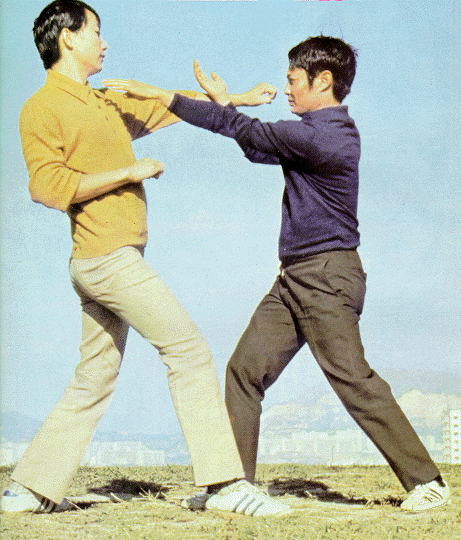
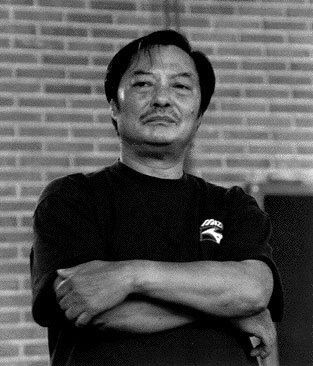
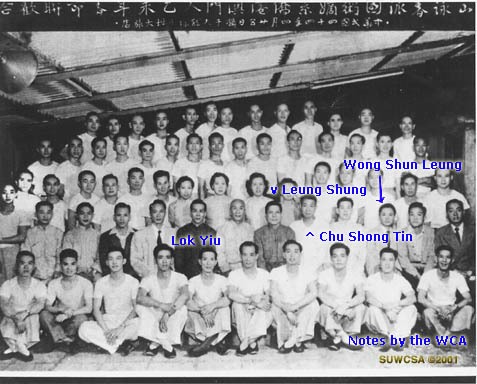
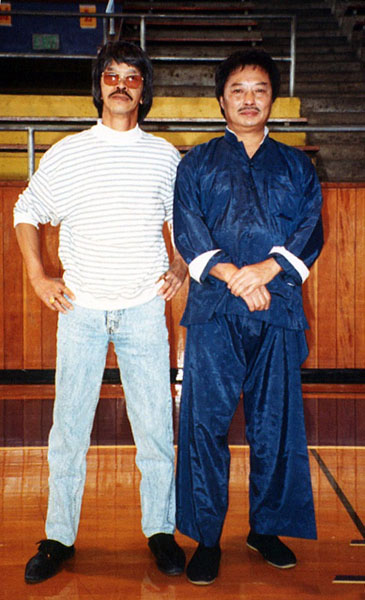
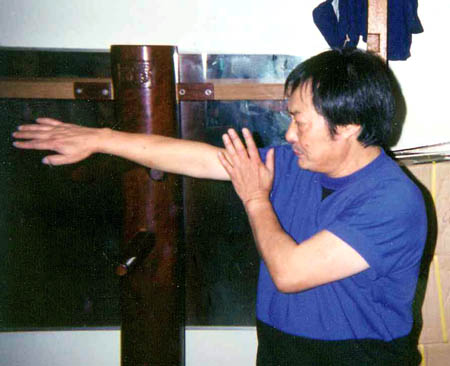
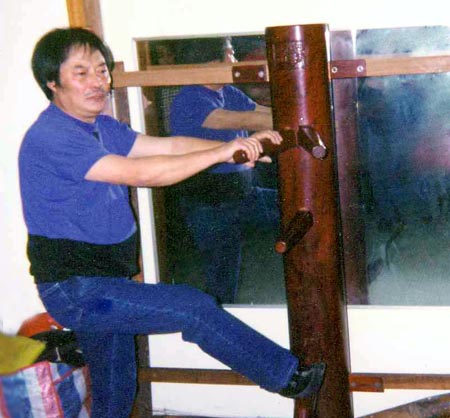
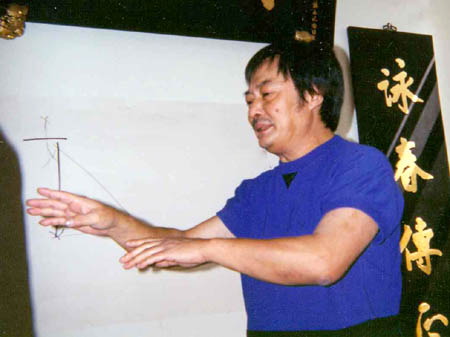
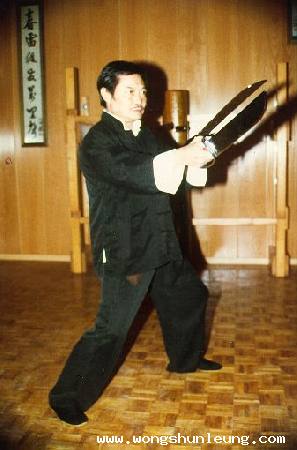
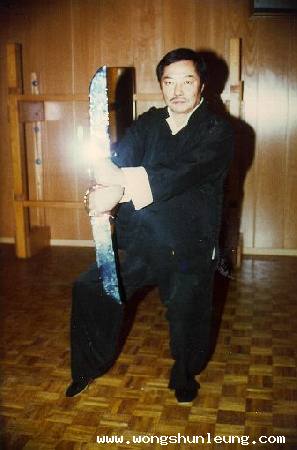
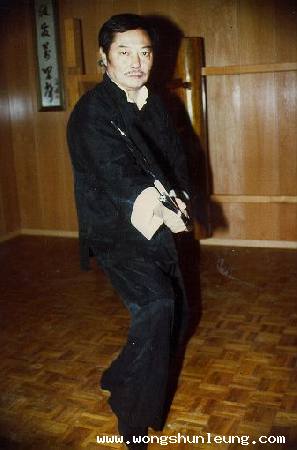
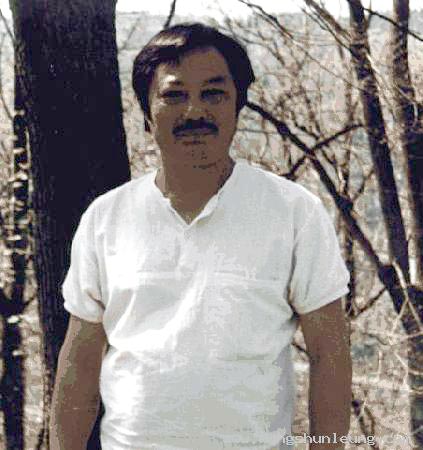
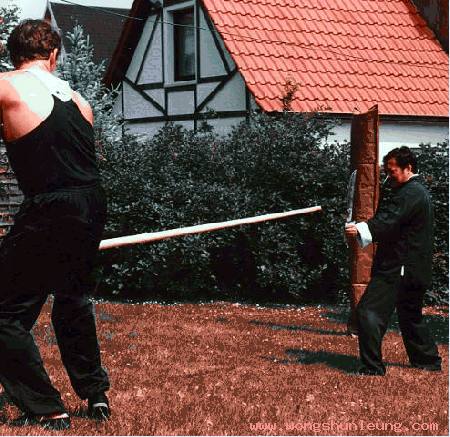
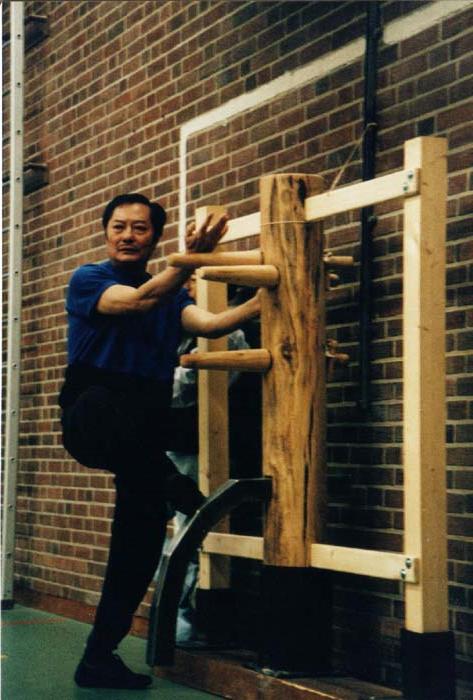
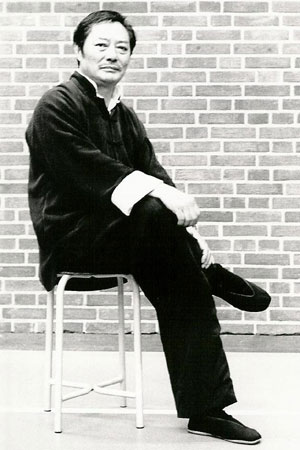
1935-1997. Known as
“Gong Sau Wong”, or “King of Talking with the Hands”, due to the fact he
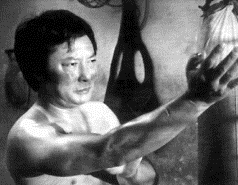
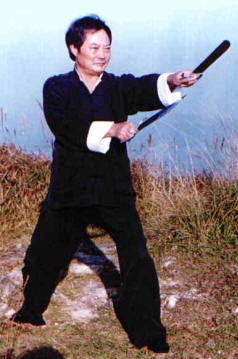
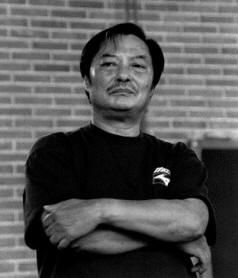
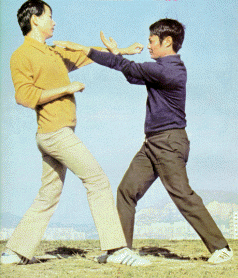
fought a bunch of challenge matches in the 50's and 60's and never lost.
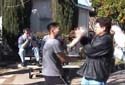
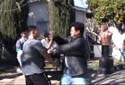
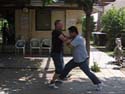
He is the man that really put Wing Chun on the map. Yip Man's 4th
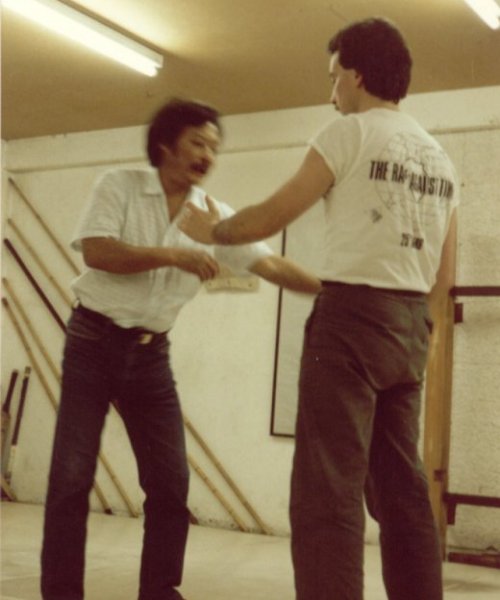
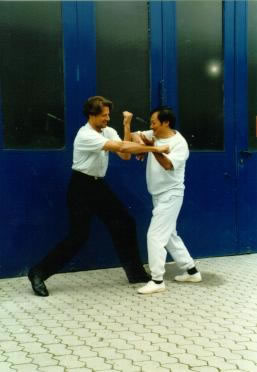
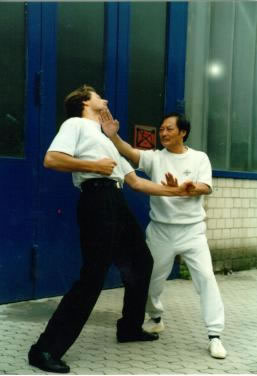
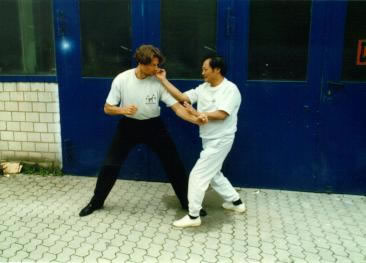
Disciple. full bio Most pictures from
Philipp Bayer's site and
Gert-Jan
Ketelaar's Site. They have some more on there if you check
them out. |
Master of System under Yip Man |
|
|
 |
|
|
|
|
|
|
Here
are some more Wong Shun Leung Lineage Students/Sifus I have
yet to add to the lists:
Philipp Bayer -> Wil Visser
http://www.geocities.com/vtkfae/ -> Borja
http://usuarios.lycos.es/brabass/index.htm;
Wu Chun Lam:
http://wingchun.hk.st/
Cliff Au Yeung:
http://www.vt.com.hk/
John Smith:
http://members.ozemail.com.au/~jr.smith/
Enzo Verratti:
http://www.wslwingchun.org/
Jean Marc Noblot & Chan Keo:
http://www.chez.com/baseweb/
Carsten Werhan/Lars Ender/Oliver Grams:
http://www.vingtsundelta.de/
Tom Maslen:
http://www.vingtsunkungfu.co.uk
Lucas Castrounis:
http://www.teamwingchun.co.uk
Ged Kennerk's
http://www.stockportwingchun.co.uk/
Anthony Kan -
homepage
|
Ali Arslan - Germany (WSL Assoc. UK) |
V. Tripic - Germany |
|
Jose Ortiz - Spain (WSL Assoc. UK) |
Nino Bernardo - UK |
|
Archimede Tentindo, Rome, Italy (WSL Assoc. UK) |
Nino Bernado - Ibiza |
|
Andreas Thumfart, Graz, Austria (WSL Assoc. UK) |
Jean Noblot & Chan Keo - France |
|
Tom Maslen, High Wycombe, UK (WSL Assoc. UK) |
Philip Ng -
Illinois, USA |
|
Sarper Gözütok, Ankara, Turkey (WSL Assoc. UK) |
John Smith - Australia |
|
J. Szymankiewicz - Poland |
Direct Wing Chun - Jim Halliwell |
|
Mike Louison - Greenwich, UK (Ng Hong) |
WONG SHUN LEUNG WING CHUN- SHANGHAI
|
|
Stephen Joffe - Boulder, Colorado, USA |
WONG SHUN LEUNG VING TSUN- AUSTRIA
|
|
Lutz Komp (Philipp Bayer) - Germany |
WONG SHUN LEUNG VING TSUN-CANADA |
|
Phillip Bayer - Kiel, Germany |
http://www.francoregalzi.org/
|
|
Barry Lee - Germany 3 |
http://www.teamwingchun.co.uk/main.php?article=0&title=Home
|
|
Barry Lee 4 - Ulm, Germany |
http://www.arti-marziali.it/nino.php
|
|
Barry Lee - Holland |
United Ving Tsun Kung Fu Society - Holland |
WSL Lineage Schools
|
 Colorado
(top)
Colorado
(top) |
 |
Centerline Martial Arts
Unit 102, 4949 North Broadway
Boulder, CO, 80304
720 933 6011
centerlinemartialarts@hotmail.com
Yip Man -> Wong Shun Leung -> Michael Street -> S.
Joffee
Run By: Stephen Joffee |
School located in beautiful Boulder, Colorado, USA;
right on the Rocky Mt front range - altitude 5543ft. A
world class training center, strictly no fluff &
nonsense. Trainer to 19th special forces US Army & Utah,
Arizona SWAT. |
|
New York
(top) |
 |
Wong
Shun Leung Ving Tsun System - VTKFAE
Fighthouse Gym
122 West 27th St 2 floor [ 6 & 7 aves ]
New York, NY 10011
917-757-7493
wslnyc@earthlink.net
Yip Man - Victor Kan / Wong Shun Leung -> Philipp Bayer
->
Run By: Kevin Gledhill |
Kevin Gledhill started Ving Tsun training in 1984 under
V Kan in London UK and now training under Sifu Philipp
Bayer a student of the late GM Wong Shun Leung .Now
teaching in NYC. |
|
 Greece
(top)
Greece
(top) |
|
 |
Ving Tsun Kung
Fu Greece (Philipp Bayer's Site)
Papanastasiou 251
Heraklion, Crete 71409
0030 6945 905885
svsvtgr@yahoo.com
Yip Man -> Wong Shun Leung -> Philipp Bayer -> Sven
Scheffen
Run by: Sven Scheffen |
Sven started Ving Tsun training in 1994.Is currently
representing the VTKFAE
in Greece. |
|
 Italy
Italy |
 |
Martial Arts
Healing Academy
Sal. Nuova N.S. Del Monte 3
Genova, Italy 16121
3382889482
info@arti-marziali.it
Yip Man -> Wong Shun Leung -> (Nino Bernardo) ->
Jean-Marc Noblot & Chan Keo -> Emilio Grasso
Run By: Emilio Grasso |
Head of the Wing Chun B.A.S.E.(Body Mechanic Application
for Self-Evolution) in Italy. |
|
 United Kingdom
(top)
United Kingdom
(top) |
 |
Stockport Wing Chun Academy
Hazel Grove, Stockport, Manchester
U.K.
07773239794
ged1973@aol.com
Yip Man -> Wong Shun Leung -> David Peterson -> Ged Kennerk
Run By: Ged Kennerk |
Has been a committed instructor of the WSL Way under DMP for over 3 years. |
 |
The Warehouse
Near Finsbury Park
London
07753-386 356
warehousekungfu@aol.com
Yip Man -> Wong Shun Leung -> Nino Bernardo -> Guy Cofie
Run By: Guy Cofie |
(Private club, please contact Guy).
The Warehouse also benefits from the input of many of Nino's other senior students from the basement era. |
 |
Reading
Academy Wing Chun & Kali Club
Cow Lane,Caversham
Reading, Berkshire
0118-9788616
lucas@teamwingchun.co.uk
Yip Man -> Wong Shun Leung -> Nino Bernardo -> Lucas
Castrunis
Run By: Lucas Castrunis |
|
|
|
Ving Tsun Kung
Fu Association Europe U.K. (Bayer's Site)
London, SE 20
07802773215
desmondspencer123@btinternet.com
Yip Man -> Wong Shun Leung -> Philipp Bayer -> Desmond
Spencer
Run by: Desmond Spencer |
Student of Philipp Bayers since 1997.
Sunday's at the Swiss Cottage Community Centre Trophy
room, on Winchester Road Swiss Cottage NW3, times 2:30pm
to 5:00pm.
Tuesday's and Thursday's in South London Area, Time's
8:00pm to 10:00pm. |
|
Belgium
 |
|
 |
Ecole Liegeoise de Ving Tsun
Salle l'Elan, Rue Delcloche 6
Liege, B-4000, Belgium
+32 477 42 22 37
info@vingtsunliege.be
Yip Man -> Wong Shun Leung -> Philipp Bayer -> Gert-Jan Ketelaar -> Hani Sabbagh
Run By: Hani Sabbagh |
Wong Shun Leung Ving Tsun Belgium.
Member of UVTKFS organization. |
|
|
LUIGE
Information: Michael Dreher
+49 (0)173-1935557 |
|
|
France
 |
 |
Tao Kwoon
Rue Bonaparte
Nice, Paris
0033493048162
sifu@taokwoon.com
Yip Man -> Wong Shun Leung -> Nino Bernardo -> Wilfrid Raimond
Run by: Wilfrid Raimond |
New Kwoon to open 2006/2007. Private tuition only until then. |
|
Switzerland
 |
|
 |
Ving Tsun Kung Fu Association Europe
Engelgasse 65
Basel, 4005, Switzerland
0041 76 414 48 17
admin@vingtsunkungfu.ch
Yip Man -> Wong Shun Leung -> Philipp Bayer -> Daniel Engelberger
Run by: Daniel Engelberger |
|
|
|
|
|
|
Wong Shun Leung Lineage Forums: |
|
Forum Name |
Homepage |
Description |
 |
Ving Tsun Forum |
forum |
About Wong Shun Leung Ving
Tsun Kung Fu. |
 |
A Philipp Bayer Wong Shun Leung Forum |
forum |
An English Section, but most is
Dutch I think. |
 |
Wong Shun
Leung: the man and his method |
forum |
Probably the best WSL
Forum by far: "dedicated to the
memory of Wong Shun Leung. Feel free to reminisce about the man and discuss
his method of Ving Tsun." |
 |
"Gary Lam Wing Chun" |
Messages |
Private: "This group is dedicated to a friendly and free
exchange of ideas on modern and traditional Wing Chun. All styles and forms
of Wing Chun are welcome to post. This is an open, unmoderated forum of
opinion, please be polite. Thank you." |
| |
A Wong Shun Leung Forum |
forum |
tiny. Like 1-3 posts.
Monitored by the Wong Shun Leung Ving Tsun
Association UK. |
|
|
|
|
|
Wong Shun Leung Lineage
Videos/Books Now Offered At the Wing Chun Archive: |
|
|
Wong
Shun Leung 1996 VTAA Sil Lum Tao Seminar
Own a piece of Wing Chun history with this RARE Footage
of WSL teaching Sil Lim Tao, just a year before his
death. This was a limited run DVD and has
SOLD OUT. |
|
|
Wong
Shun Leung 1996 Beijing Chum Kiu Seminar
Own this priceless gem of WSL teaching the Chum Kiu form
and application. Bonus footage of WSL teaching the
Dummy is included.
This
was a limited run DVD and has SOLD
OUT. |
|
Clive Potter DVDs [ORDER
Clive Potter DVDs HERE] |
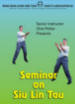 |
Siu Lin Tao Seminar
An in-depth
study of the Ving Tsun first form. The entire form Siu
Lin Tao explained with comprehensive explanations and
examples. Clive Potter with the help of his Assistant
Senior Instructor, Adam Cope giving a seminar at his Ving
Tsun school in St. Albans, UK. $44.99 PAL
Contains Private Footage of Wong Shun
Leung Doing Some of Sil Lum Tao in Intro. |
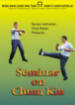 |
Chum Kiu Seminar
An in-depth
study of the Ving Tsun second form. The entire form
Chum Kiu explained with comprehensive explanations and
examples. Clive Potter with the help of his Assistant
Senior Instructor, Adam Cope giving a seminar at his Ving
Tsun school in St. Albans, UK. $44.99 PAL
Contains Private Footage of Wong
Shun Leung Doing Some of Chum Kiu in Intro. |
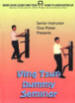 |
Dummy Seminar
An in-depth study of
the Ving Tsun Wooden Dummy form. The entire form Dummy
explained with comprehensive explanations and examples.
Filmed on location at the Wing Tsun school of Alan Gibson in
Southampton. $44.99 PAL
Contains Private Footage of Wong Shun
Leung Doing Some of the Dummy in Intro. |
|
Gary Lam DVDs [ORDER
Gary Lam DVDs HERE] |
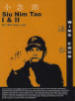 |
New!
DVD : LEVEL I : SIU NIM TAO I & II
New!
This DVD is a must. Gary Lam
describes the techniques, applications and structure
of this all-important form. You'll feel almost as if
you were part of this DVD in which Sifu Lam reveals
all of the secrets of the foundation of Wing Chun.
He's held nothing back, revealing and explaining not
only the SIU NIM TAO form, but also it's lethal
street application.
Approx. : 123 minutes
$59.95 |
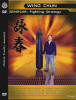 |
DVD :
Seminar : Fighting Strategy
Fighting
tips from an all Kung-Fu Champion. Sifu Gary Lam's insightful seminar on
the skills, the plans and the tips you need to
improve your overall fighting. Each insight is based
on his personal fighting experiences in the ring-and
on the street. Now's your chance to gain valuable,
realistic fighting knowledge from one of the world's
best!
Approx. : 110 minutes $29.95 |
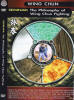 |
DVD : Seminar : The Philosophy Of
Wing Chun Fighting
In this seminar, Sifu Gary Lam
offers an exciting and detailed explanation of how
the five elements ( water, wood, fire, earth and
metal ) apply directly to this martial art. If you
are an advanced Wing Chun practitioner, be sure to
add this gem to your DVD collection.
Approx. : 95 minutes
$39.95 |
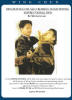 |
DVD :
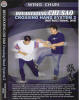
Devastating Chi-Sao CROSSING HAND System
Sifu Gary Lam takes you step by step in revealing all
the basics of Wing Chun's relentless and smothering
attacks. Learn how to effectively cross your opponents
hands, making his most aggressive maneuvers useless, as
well as how to strike, push and pull with devastating
effectiveness. Beginner and advanced Wing Chun
practitioner will benefit greatly from this DVD.
Approx. : 89 min
$49.95 |
 |
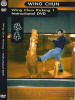
DVD : Devastating Chi-Sao CROSSING HAND System 2
Sifu Gary Lam
takes you to the next step in revealing Wing Chun's
advanced, brutal, incapacitating attacks. Learn how
to effectively control your opponent's Centerline,
as well as to break his Power Points. You'll
also learn the six actions of effective Double-Hand
Pushing, or Po Pai, a forgotten technique
that Sifu has reintroduced to practitioners in the
US. Approx. : 58 minutes
$49.95 |
 |
DVD : Wing Chun Kicking 1
Instructional
Wing
Chun kicking? Many have heard of its devastating
power, but few know its secrets. Sifu Gary lam explains and demonstrates
proper Wing Chun kicking techniques, step by step.
When properly executed, these kicks can be the most
deadly fight-stopping actions you’ve ever seen ! Now
you, too, can know what was reserved in the past for
the select few.
Approx. : 43 minutes
$49.95 |
 |
DVD : Awesome Kicking Technique
Instructional (Kicking 2)
Sifu Gary Lam
explains and demonstrates awesome kicking techniques
frequently use in real life fighting. Explaining how
to apply and defend against kicks drawn from a
number of disciplines, each section packs in actions
and critical information to help you swiftly add
legs to your fighting arsenal. Including
intense workouts on a simple tire and the sand bag.
Approx. : 45 minutes
$39.95 |
 |
DVD : The Complete System Of
Wooden Dummy
The traditional form has 108
movements, but this has been expanded to 138 by Sifu Lam's teacher, Wong Shun Leung, with Grand Master
Yip Man's approval based on his years of challenge
matches (Beimo). Sifu Gary Lam not only teaches all
of the fundamental technique in this DVD, but also
breaks down each section to provide detail
explanation of each move & its application.
101 m $59.99 |
 |
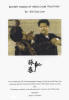
DVD : Backyard Wing Chun Chi Sao Series # 1
In
BACKYARD CHI SAO SERIES # 1, Sifu Gary Lam
demonstrates his famous PAK SAO, PAK SAO DEFENSE,
FUNG HAO, CHANGING & COVER HANDS ACTIONS. Footage
were recorded in Sifu Lam's backyard without any
professional visual or audio enhancement. Collectors
will be happy to know that each DVD is individually autographed
by Sifu Gary Lam. Approx. : 35 minutes
$25.00 |
 |
DVD : Secret Hands Of Wing Chun "Pho
Phai"
In
a rare backyard CHI-SAO demonstration footage. World
renown Sifu Gary Lam unveils the SECRET HANDS OF
WING CHUN " PHO PHAI " for the very first time.
Everything is unedited, uncut and uncensored. A must
see for all Wing Chun enthusiasts ! Collectors will
be happy to know that each DVD is individually
autographed
by Sifu Gary Lam. Approx. : 30 minutes $25.00 |
|
Alan Gibson DVDs [ORDER
Alan Gibson Books and DVDS HERE] |
| Alan Gibson studied
the WSL method after learning Ip Chun's system. The
Videos are a bit of a mix, I believe. |
|
see
here |
Beginning Wing Chun |
|
see
here |
Wing Chun -
Master's Seminar |
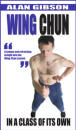 |
Wing Chun - In a Class
of its Own
A
unique and refreshing insight into the Wing Chun system;
Siu Lim Tao and Chum Kiu forms are studied. All the
major drills and theories are investigated from the
beginners perspective and illustrated with explosive
applications.
60 mins. PAL $44.99 |
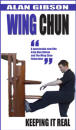 |
Wing Chun: Keeping It Real
A spectacular, brand-new
VHS video and DVD
featuring the wooden dummy form and application.
Followed by pressure testing drills, demonstrating how
you can safely train your Wing Chun under 'real fight
stress'. PAL $44.99 |
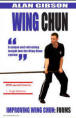 |
Improving Wing Chun:
Forms
Does exactly what it says on the box. All six Wing Chun
forms (Sil Lum Tao, Chum Kiu, Biu Jee, Mook Yan Jong,
Bot Jaam Do, and Luk Dim Boon Kwan) are demonstrated
clearly from start to finish, in three camera angles to
facilitate easy and accurate learning. There is also a
general commentary and description of each form to
improve not your technique, but your understanding also.
30 mins. PAL
$27.99 |
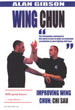 |
Improving Wing Chun: Chi Sao
A comprehensive demonstration of how to train and
improve your fighting skill through Chi sau. With a
running comentary and changing camera angles, this film
is set to become the new benchmark for quality in
instructional martial arts films.
PAL $44.99 |
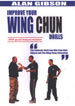 |
Improving Wing Chun:
Drills
This DVD focuses on honing your reactions through
Drills. It is a must have!
All the major Wing Chun
drills (and some you won't have seen before)
demonstrated and explained.
Clearly filmed and explained, from multiple angles to
facilitate easy and accurate learning. PAL
$44.99 |
 |
Why Wing Chun Works
Why Wing Chun Works is an essential training
aid for anyone thinking about, or already studying Wing
Chun. The Wing Chun system has many logical and
systematic learning methods, similarly this book is
divided into sections to facilitate the learning
process, and to make cross referencing simple. Why Wing
Chun Works will also prove invaluable for other
experienced martial artists wishing to broaden their
horizons by studying different arts. This book explains;
how Wing Chun works, why it is so effective in practice
and why its methods are so different to other arts.
160 pages. |
 |
Why Wing Chun Works II:
Simple Thinking, Intelligent Fighters
In Simple Thinking: Intelligent Fighters Alan
explains how individual techniques and positions
evolve as a result of the underlying Wing Chun
concepts, and the forces we are likely to meet
in combat. There is lots of beautiful and
detailed photography, and the clearly explained
text describes how the fighting applications
relate to Wing Chun theory. This book will
undoubtedly become an invaluable reference work,
both for Wing Chun practitioners and to all
other thinking martial artists. 160
pages.
Forewords by Dave Peterson and Clive Potter.
|
 |
Why Wing Chun Works III:
The Wing Chun Forms: Combat Textbooks
This time, we are taken us on a detailed
journey through the first two "empty-hand"
forms and the unique Wooden Dummy form. The entire Wooden
Dummy form is illustrated in numbered
pictures. After finishing this book, the
reader will not only have a detailed
knowledge of the depth of the information
contained within the forms, they will also
have been inspired to discover ever greater
insights into the Wing Chun personal combat
system, and have at their disposal a superb
reference which they will refer to for
inspiration again and again. This book is a
must for every martial arts library. 160
Pages. |
Please Visit
Everything Wing Chun
to purchase these great Books and DVDs.
|